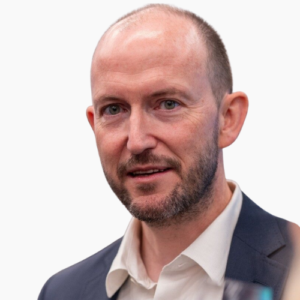
Nick Brandon
Chief Scientific Officer Neumora
Dr. Nicholas Brandon has served as our Chief Scientific Officer since January 2022 and from April 2020 to December 2021 served as our Chief Research Officer. From April 2019 to April 2020, Dr. Brandon served as senior vice president and head of biology at Jnana Therapeutics. Previously, Dr. Brandon worked at AstraZeneca from 2012 to April 2019, where he held multiple positions including chief scientist and head of neuroscience discovery. Dr. Brandon has also served as an adjunct professor of neuroscience at Tufts School of Medicine since 2016 and as an honorary professor at University of Glasgow since 2010. Previously, Dr. Brandon was head of psychiatry and behavioral disorders for a period that bridged the Wyeth and Pfizer Neuroscience organizations between 2006 and 2012.
Dr. Brandon holds an undergraduate degree in Genetics from Pembroke College, Cambridge University and a Ph.D. from University College London.
Seminars
- How late stage failures continue to stem from heterogeneous patient populations and poor endpoint sensitivity, underscoring the critical need for biomarker driven stratification to boost Phase 2/3 success rates
- What 2025–2026 taught us about placebo inflation, highlighted by recent schizophrenia and depression trial outcomes, and how study site variability, digital tools, and speech/physiological biomarkers may mitigate expectation bias
- Why translational gaps persist across muscarinic, psychedelic, and neuroplasticity based mechanisms, and how emerging mechanistic and genomic biomarkers can better link target engagement with clinical effects in Phase 2/3
- How sponsors are redesigning global Phase 2/3 execution—leveraging faster moving regions, adaptive designs, and early signal-detection: to overcome long timelines, recruitment bottlenecks, and historically low CNS trial success rates
- How the recent FDA approval of an M1/M4 targeting muscarinic agonist–antagonist therapy has opened the door for next generation mechanisms, prompting the field to explore which muscarinic pathways hold the greatest future therapeutic potential
- How M1 and M4 receptor modulation may diverge in future clinical applications, with emerging evidence suggesting distinct roles in cognitive processing, behavioural regulation, and symptom domains underserved by dopamine based treatments
- How advancing Phase 1 muscarinic programs is helping define optimal translational strategies for the future, including biomarker guided dosing, refined safety monitoring, and strategic choices around patient versus healthy volunteer enrolment
- How next generation M4 selective PAMs and other muscarinic focused innovations may expand the therapeutic footprint across neuropsychiatric and neurodegenerative indications, positioning muscarinic pathways as a long term pillar of future CNS drug development
- Will PAMs recapitulate efficacy of orthosteric agonists, as seen with Cobenfy?