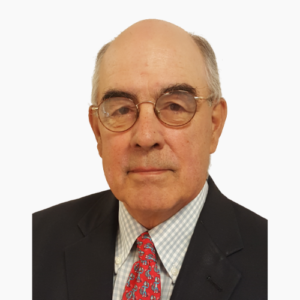
Joseph T. Coyle
Eban S Draper Professor of Psychiatry and Past-Chairman of Psychiatry Harvard Medical School
Joseph T. Coyle graduated from Holy Cross College and then received his medical degree from the Johns Hopkins School of Medicine. Following a pediatric internship, he was a research fellow for three years at the National Institutes of Mental Health with Nobel Laureate, Julius Axelrod. He completed his psychiatric residency at Hopkins and joined the faculty. In 1982, he became the Director of the Division of Child and Adolescent Psychiatry. From 1991 to 2001, he served as Chairman of the Consolidated Department of Psychiatry with its 1600 faculty at Harvard Medical School. He now holds the Eben S. Draper Chair of Psychiatry and Neuroscience (Emeritus).
Dr. Coyle’s research interests include developmental neurobiology, mechanisms of neuronal vulnerability and psychopharmacology with a major focus on the neurobiology of schizophrenia and related serious mental disorders. He pioneered studies implicating glutamatergic neurotransmission on the neurobiology of schizophrenia and the importance of developing drugs that modify glutamatergic neurotransmission for the treatment of schizophrenia and related mental disorders. He has published over 600 scientific articles and has edited fourteen books (h-index of 139 with >86K citations).
He is the past-president of the Society for Neuroscience (1991), a member of the National Academy of Medicine (1990), a fellow of the American Academy of Arts and Sciences (1993) and a fellow of the American Association for the Advancement of Science (2005). His research has been recognized with several awards including the John Jacob Abel Award and the Otto Krayer Award from ASPET (1978, 2026), the McAlpin Research Achievement Award from the National Mental Health Association (1992), the Lieber Prize from NARSAD (2004), the Axelrod Award from SfN (2013) and the Sarnat International Award for Mental Health from the National Academy of Medicine (2017). He has consulted widely with the Pharmaceutical industry (BristolMeyerSquibb, Merck, a decade on the Abbott Scientific Advisory Board) as well as biotechs such as Nova and Forum. He is a founder and Chairman of Waveform Biosciences.
Seminars
- Highlight the limitations of DSM 5 diagnostic categories in schizophrenia and illustrate how etiologic heterogeneity has contributed to repeated failures of mechanistically novel drug candidates
- Demonstrate how EEG derived cortical activity patterns, paired with AI driven analysis, can provide a mechanistic basis for prospectively identifying patients whose glutamatergic pathology aligns with specific therapeutic mechanisms
- Present evidence from pomaglumetad Phase 3 re analysis showing that baseline EEG markers can identify a ~20% subgroup with substantial cognitive and negative symptom improvement, revealing responders concealed within a non significant overall trial
- Outline how ongoing work in schizophrenia and autism aims to validate EEG based responder identification across disorders with shared cortical circuit disruption, supporting a broader precision therapy framework
- Highlight the limitations of DSM 5 diagnostic categories in schizophrenia and illustrate how etiologic heterogeneity has contributed to repeated failures of mechanistically novel drug candidates
- Demonstrate how EEG derived cortical activity patterns, paired with AI driven analysis, can provide a mechanistic basis for prospectively identifying patients whose glutamatergic pathology aligns with specific therapeutic mechanisms
- Present evidence from pomaglumetad Phase 3 re analysis showing that baseline EEG markers can identify a ~20% subgroup with substantial cognitive and negative symptom improvement, revealing responders concealed within a non significant overall trial
- Outline how ongoing work in schizophrenia and autism aims to validate EEG based responder identification across disorders with shared cortical circuit disruption, supporting a broader precision therapy framework